
The following OpenType features are included in this font:
PREHISTORY
UNDERWATER
Stratovolcano
Eyjafjallajökull
Lessons of Darkness
Cave of Forgotten Dreams (2010)
In his exploration of active volcanoes in Vanuatu, Indonesia (Mount Sinabung and Mount Merapi), Ethiopia (Erta Ale), Iceland, and North Korea (Paektu Mountain), Herzog is led by volcanologist Clive Oppenheimer, who hopes to minimize destructive impact of volcanoes through his work.
The primary goal of Herzog’s quest is to get a better idea of our origins and nature as a species. He finds volcanoes mysterious, violent, and rapturously beautiful, and claims that “there is no single one that is not connected to a belief system.”
La Soufrière – Warten auf eine unausweichliche Katastrophe (“La Soufrière – Waiting for an Inevitable Disaster”) is a 1977 documentary film in which German director Werner Herzog visits an evacuated town on the island of Guadeloupe, where the volcano La Grande Soufrière is predicted to erupt. The pretext of this film was provided when Herzog “heard about the impending volcanic eruption, that the island of Guadeloupe had been evacuated and that one peasant had refused to leave, [he] knew [he] wanted to go talk to him and find out what kind of relationship towards death he had” (Cronin). Herzog explores the deserted streets of the towns on the island. The crew of three treks up to the caldera, where clouds of sulfurous steam and smoke drift like “harbingers of death” (Peucker), an example of the sublime Herzog seeks to conjure in his films. Herzog converses in French with three different men he finds remaining on the island: one says he is waiting for death, and even demonstrates his posture for doing so; another says he has stayed to look after the animals. In the end, the volcano did not erupt, thus sparing the lives of those who had remained on the island, including Herzog and his crew.
For now, I’ll stay on the trusted ground of praxis. Even if we cannot really grasp it, I would like to tell you about an unforgettable encounter I had with Truth while shooting Fitzcarraldo. We were shooting in the Peruvian jungles east of the Andes between the Camisea and Urubamba rivers, where I would later haul a huge steamship over a mountain. The indigenous people who lived there, the Machiguengas, made up a majority of the extras and had given us the permit to film on their land. In addition to being paid, the Machiguengas wanted further benefits: they wanted training for their local doctor and a boat, so that they could bring their crops to market a few hundred kilometers downriver themselves, instead of having to sell them through middlemen. Finally, they wanted support in their fight for a legal title to the area between the two rivers. One company after another had seized it in order to plunder local stocks of wood; recently, oil firms had also been casting a greedy eye on their land. Every petition we entered for a deed vanished at once in the labyrinthine provincial bureaucracy. Our attempts at bribery failed, too. Finally, having traveled to the ministry responsible for such things, in the capital city of Lima, I was told that, even if we could argue for a legal title on historical and cultural grounds, there were two stumbling blocks. First, the title was not contained in any legally verifiable document, but supported only by hearsay, which was irrelevant. Second, no one had ever surveyed the land in order to provide a recognizable border. To the latter end, I hired a surveyor, who furnished the Machiguengas with a precise map of their homeland. That was my part in their truth: it took the form of a delineation, a definition. I’ll admit, I quarreled with the surveyor. The topo-graphic map that he furnished was, he explained, in certain ways incorrect. It did not correspond to the truth because it did not take into account the curvature of the earth. In such a little piece of land? I asked, losing patience. Of course, he said angrily, and pushed his water glass toward me. Even with a glass of water, you have to be clear about it, what we’re dealing with is not an even surface. You should see the curvature of the earth as you would see it on an ocean or a lake. If you were really able to perceive it exactly as it is — but you are too simple-minded — you would see the earth curve. I will never forget this harsh lesson. The question of hearsay had a deeper dimension and required research of an entirely different kind. [Arguing for their title to the land] the Indians could only claim that they’d always been there; this they had learned from their grandparents. When, finally, the case appeared hopeless, I managed to get an audience with the President, [Fernando] Belaúnde. The Machiguengas of Shivankoreni elected two representatives to accompany me.
Informations
aalt
c2sc
calt
case
ccmp
cpsp
dlig
dnom
frac
hist
kern
liga
lnum
locl
numr
onum
ordn
pnum
sinf
smcp
ss01
ss02
ss03
subs
sups
tnum
zero
- 123 SS01Open circled figures
- 456 SS02Close circled figures
- ←↑→↓ SS03Alternative arrows
Glyphset
A
Uppercases
A
B
C
D
E
F
G
H
I
J
K
L
M
N
O
P
Q
R
S
T
U
V
W
X
Y
Z
Small Capitals
a
b
c
d
e
f
g
h
i
j
k
l
m
n
o
p
q
r
s
t
u
v
w
x
y
z
Lowercases
a
b
c
d
e
f
g
h
i
j
k
l
m
n
o
p
q
r
s
t
u
v
w
x
y
z
Accented Uppercases
À
Á
Â
Ã
Ä
Ā
Ă
Å
Ǻ
Ą
Æ
Ǽ
Ć
Ĉ
Č
Ċ
Ç
Ď
Đ
È
É
Ê
Ẽ
Ě
Ë
Ē
Ĕ
Ė
Ę
Ĝ
Ǧ
Ḡ
Ğ
Ġ
Ģ
Ĥ
Ħ
Ì
Í
Î
Ĩ
Ï
Ī
Ĭ
İ
Į
IJ
Ĵ
Ķ
Ĺ
Ľ
Ļ
Ł
Ŀ
Ń
Ň
Ñ
Ņ
Ò
Ó
Ô
Õ
Ö
Ō
Ŏ
Ő
Ǫ
Ø
Ǿ
Œ
Ŕ
Ř
Ŗ
ẞ
Ś
Ŝ
Š
Ş
Ș
Ť
Ț
Ţ
Ŧ
Ù
Ú
Û
Ũ
Ü
Ū
Ŭ
Ů
Ű
Ų
Ẁ
Ẃ
Ŵ
Ẅ
Ỳ
Ý
Ŷ
Ỹ
Ÿ
Ȳ
Ź
Ž
Ż
Ə
Ɲ
Ŋ
Ð
Þ
DŽ
Dž
LJ
Lj
NJ
Nj
Accented Small Capitals
à
á
â
ã
ä
ā
ă
å
ǻ
ą
æ
ǽ
ć
ĉ
č
ċ
ç
ď
đ
è
é
ê
ẽ
ě
ë
ē
ĕ
ė
ę
ĝ
ǧ
ḡ
ğ
ġ
ģ
ĥ
ħ
ì
í
î
ĩ
ï
ī
ĭ
i̇
į
ij
ĵ
ķ
ĺ
ľ
ļ
ł
ŀ
ń
ň
ñ
ņ
ò
ó
ô
õ
ö
ō
ŏ
ő
ǫ
ø
ǿ
œ
ŕ
ř
ŗ
ß
ś
ŝ
š
ş
ș
ť
ț
ţ
ŧ
ù
ú
û
ũ
ü
ū
ŭ
ů
ű
ų
ẁ
ẃ
ŵ
ẅ
ỳ
ý
ŷ
ỹ
ÿ
ȳ
ź
ž
ż
ə
ɲ
ŋ
ð
þ
dž
lj
nj
Accented Lowercases
à
á
â
ã
ä
ā
ă
å
ǻ
ą
æ
ǽ
ć
ĉ
č
ċ
ç
ď
đ
è
é
ê
ẽ
ě
ë
ē
ĕ
ė
ę
ĝ
ǧ
ḡ
ğ
ġ
ģ
ĥ
ħ
ì
í
î
ĩ
ï
ī
ĭ
i
į
ı
ij
ĵ
ȷ
ķ
ĺ
ľ
ļ
ł
ŀ
ń
ň
ñ
ʼn
ņ
ò
ó
ô
õ
ö
ō
ŏ
ő
ǫ
ø
ǿ
œ
ŕ
ř
ŗ
ś
ŝ
š
ş
ș
ß
ť
ț
ţ
ŧ
ù
ú
û
ũ
ü
ū
ŭ
ů
ű
ų
ẁ
ẃ
ŵ
ẅ
ỳ
ý
ŷ
ỹ
ÿ
ȳ
ź
ž
ż
ə
ɲ
ŋ
ð
þ
dž
lj
nj
Superior letters
a
b
c
d
e
f
g
h
i
j
k
l
m
n
o
p
q
r
s
t
u
v
w
x
y
z
Inferior letters
a
b
c
d
e
f
g
h
i
j
k
l
m
n
o
p
q
r
s
t
u
v
w
x
y
z
Ligatures
WWW
www
Th
Wh
ſ
fb
ffb
ff
fh
ffh
fi
fì
fí
fî
fï
fį
ffi
ffì
ffí
ffî
ffï
ffį
fj
ffj
fk
ffk
fl
ffl
ft
fft
tt
Discretionnary ligatures
ct
sp
st
Diacritics
́
̋
̂
̌
̆
̊
̇
̈
̃
̄
·
·
̀
́
̋
̂
̌
̆
̊
̇
̈
̃
̄
̒
̦
̧
̨
Lining figures and currencies
#
0
1
2
3
4
5
6
7
8
9
€
$
₿
¢
£
₺
ƒ
¥
₸
฿
₴
₽
₹
₪
₩
₫
Old style figures and currencies
#
0
1
2
3
4
5
6
7
8
9
€
$
₿
¢
£
₺
ƒ
¥
₸
฿
₴
₽
₹
₪
₩
₫
Tabular figures and currencies
#
0
1
2
3
4
5
6
7
8
9
€
$
₿
¢
£
₺
ƒ
¥
₸
฿
₴
₽
₹
₪
₩
₫
Tabular old style figures and currencies
#
0
1
2
3
4
5
6
7
8
9
€
$
₿
¢
£
₺
ƒ
¥
₸
฿
₴
₽
₹
₪
₩
₫
Slashed Zeros
0
Mathematical symbols
+
−
±
×
÷
=
≠
~
≈
^
¬
⌀
¤
<
>
≤
≥
∞
◊
Δ
Ω
∂
∫
√
∑
∏
π
μ
°
ℓ
℮
〈
〉
【
】
「
」
《
》
〔
〕
〖
〗
『
』
Case sensitive mathematical symbols
+
−
×
÷
=
≠
~
≈
¬
<
>
Superior figures
,
.
(
)
+
−
×
÷
=
0
1
2
3
4
5
6
7
8
9
Inferior figures
,
.
(
)
+
−
×
÷
=
0
1
2
3
4
5
6
7
8
9
Numerators
,
.
(
)
+
−
×
÷
=
0
1
2
3
4
5
6
7
8
9
Denominators
,
.
(
)
+
−
×
÷
=
0
1
2
3
4
5
6
7
8
9
Open circled figures
0
1
2
3
4
5
6
7
8
9
10
Close circled figures
0
1
2
3
4
5
6
7
8
9
10
Fractions
⁄
%
‰
¼
½
¾
⅛
⅜
⅝
⅞
Roman figures
Ⅰ
Ⅱ
Ⅲ
Ⅳ
Ⅴ
Ⅵ
Ⅶ
Ⅷ
Ⅸ
Ⅼ
Ⅽ
Ⅾ
Ⅿ
Standard punctuation
,
;
:
.
…
-
!
¡
?
¿
‽
⸮
@
‘
’
“
”
‚
„
‘
“
‹
›
«
»
&
/
\
|
¦
_
–
—
•
·
(
)
[
]
{
}
*
⁂
†
‡
§
¶
Case sensitive punctuation
-
–
—
·
‹
›
«
»
(
)
[
]
{
}
¡
¿
@
Abbreviations
℃
℉
℀
℁
℆
℅
©
℗
®
™
℠
ª
º
№
Geometrical symbols
■
□
◆
◇
●
○
◧
◨
⬒
⬓
◩
⬔
⬕
◪
⬖
⬗
⬘
⬙
◐
◑
◓
◒
◀
▶
▲
▼
◁
▷
△
▽
◂
▸
▴
▾
◃
▹
▵
▿
⏏
⏪
⏩
⏫
⏬
⏮
⏭
⏯
⏸
⏹
⏺
Miscellaneous symbols
✴
✳
✺
☀
☼
☽
☾
⚡
☁
⚙
♀
♂
⚲
⚫
⚪
◉
◎
🔍
🔎
🔒
🔓
≡
❌
⌘
♥
♡
⚑
⚐
★
☆
❤
♠
♣
♦
✓
✗
☐
☑
☒
❏
❍
◌
Arrows
←
↑
→
↓
↖
↗
↘
↙
↔
↕
➤
➣
➢
↰
↱
↲
↳
⬑
⬏
⬐
⬎
⭰
⭲
⭱
⭳
ꜜ
🔀
🔁
🔂
⮀
⮂
⮁
⮃
⮌
⮎
⮏
⮍
🔃
🔄
⟳
⟲
Alternative arrows
←
↑
→
↓
Languages
Abenaki, Afaan Oromo, Afar, Afrikaans, Albanian, Alsatian, Amis, Anuta, Aragonese, Aranese, Aromanian, Arrernte, Arvanitic, Asturian, Atayal, Aymara, Azerbaijani, Bashkir, Basque, Belarusian, Bemba, Bikol, Bislama, Bosnian, Breton, Cape Verdean Creole, Catalan, Cebuano, Chamorro, Chavacano, Chichewa, Chickasaw, Cimbrian, Cofán, Cornish, Corsican, Creek, Crimean Tatar, Croatian, Czech, Danish, Dawan, Delaware, Dholuo, Drehu, Dutch, English, Esperanto, Estonian, Faroese, Fijian, Filipino, Finnish, Folkspraak, French, Frisian, Friulian, Gagauz, Galician, Ganda, Genoese, German, Gikuyu, Gooniyandi, Greenlandic, Guadeloupean Creole, Gwich'in, Haitian Creole, Hän, Hawaiian, Hiligaynon, Hopi, Hotcąk, Hungarian, Icelandic, Ido, Igbo, Ilocano, Indonesian, Interglossa, Interlingua, Irish, Istro-Romanian, Italian, Jamaican, Javanese, Jèrriais, Kaingang, Kala Lagaw Ya, Kapampangan, Kaqchikel, Karakalpak, Karelian, Kashubian, Kikongo, Kinyarwanda, Kiribati, Kirundi, Klingon, Kurdish, Ladin, Latin, Latino sine Flexione, Latvian, Lithuanian, Lojban, Lombard, Low Saxon, Luxembourgish, Maasai, Makhuwa, Malay, Maltese, Manx, Māori, Marquesan, Megleno-Romanian, Meriam Mir, Mirandese, Mohawk, Moldovan, Montagnais, Montenegrin, Murrinh-Patha, Nagamese Creole, Nahuatl, Ndebele, Neapolitan, Ngiyambaa, Niuean, Noongar, Norwegian, Novial, Occidental, Occitan, Old Icelandic, Old Norse, Onĕipŏt, Oshiwambo, Ossetian, Palauan, Papiamento, Piedmontese, Polish, Portuguese, Potawatomi, Q'eqchi', Quechua, Rarotongan, Romanian, Romansh, Rotokas, Sami, Samoan, Sango, Saramaccan, Sardinian, Scottish Gaelic, Serbian, Seri, Seychellois Creole, Shawnee, Shona, Sicilian, Silesian, Slovak, Slovenian, Slovio, Somali, Sorbian, Sotho, Spanish, Sranan, Sundanese, Swahili, Swazi, Swedish, Tagalog, Tahitian, Tetum, Tok Pisin, Tokelauan, Tongan, Tshiluba, Tsonga, Tswana, Tumbuka, Turkish, Turkmen, Tuvaluan, Tzotzil, Uzbek, Venetian, Vepsian, Volapük, Võro, Wallisian, Walloon, Waray-Waray, Warlpiri, Wayuu, Welsh, Wik-Mungkan, Wiradjuri, Wolof, Xavante, Xhosa, Yapese, Yindjibarndi, Zapotec, Zarma, Zazaki, Zulu, Zuni
About
There is a certain calm in looking into something dangerous.
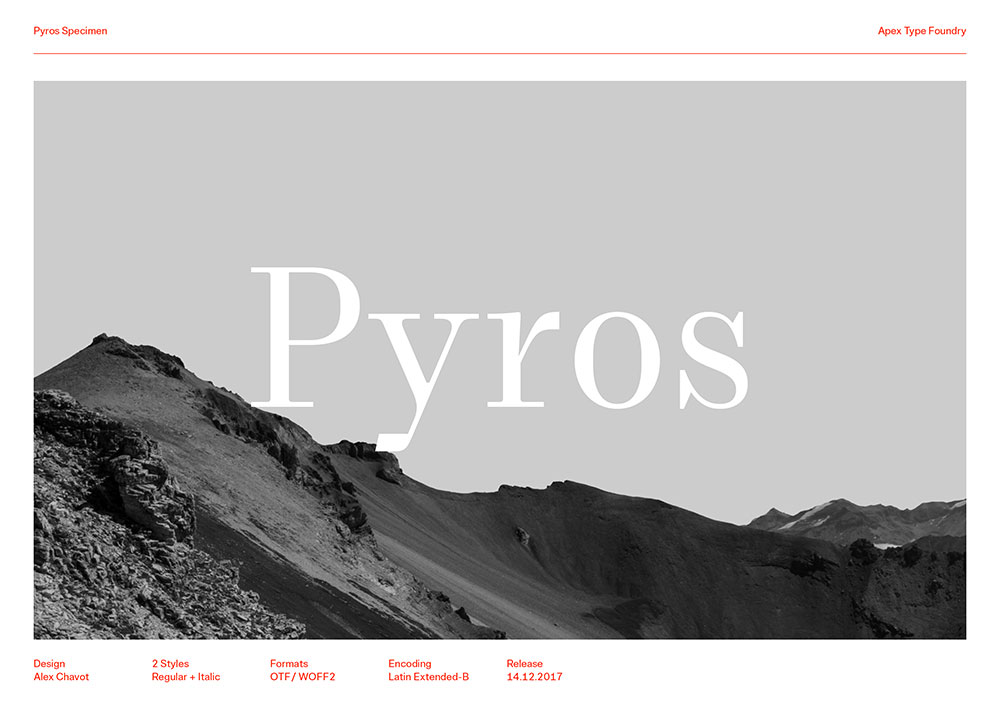
Pyros was built from that tension. A serif that stands firm, structured, composed, but carries within it the suggestion of heat. Of movement. Of something organic and not entirely settled.
Pyros is a slightly condensed contemporary serif which revisits the Modern genre: high contrast, rational proportions, vertical axis, thin serifs that cut clean. The kind of type that feels calm and familiar until it doesn’t. Its weight distribution stays balanced enough for long-form text with authority, keeping things measured, unhurried, easy on the eye. But look closer and you’ll notice what it’s been holding back. In display setting, its personality sharpens. The peculiarities surface. Strokes that fold. Curves that refuse to close the way you expect. Letters that hold their shape while quietly bending the rules that define it. A small gesture, but enough to shift the temperature.
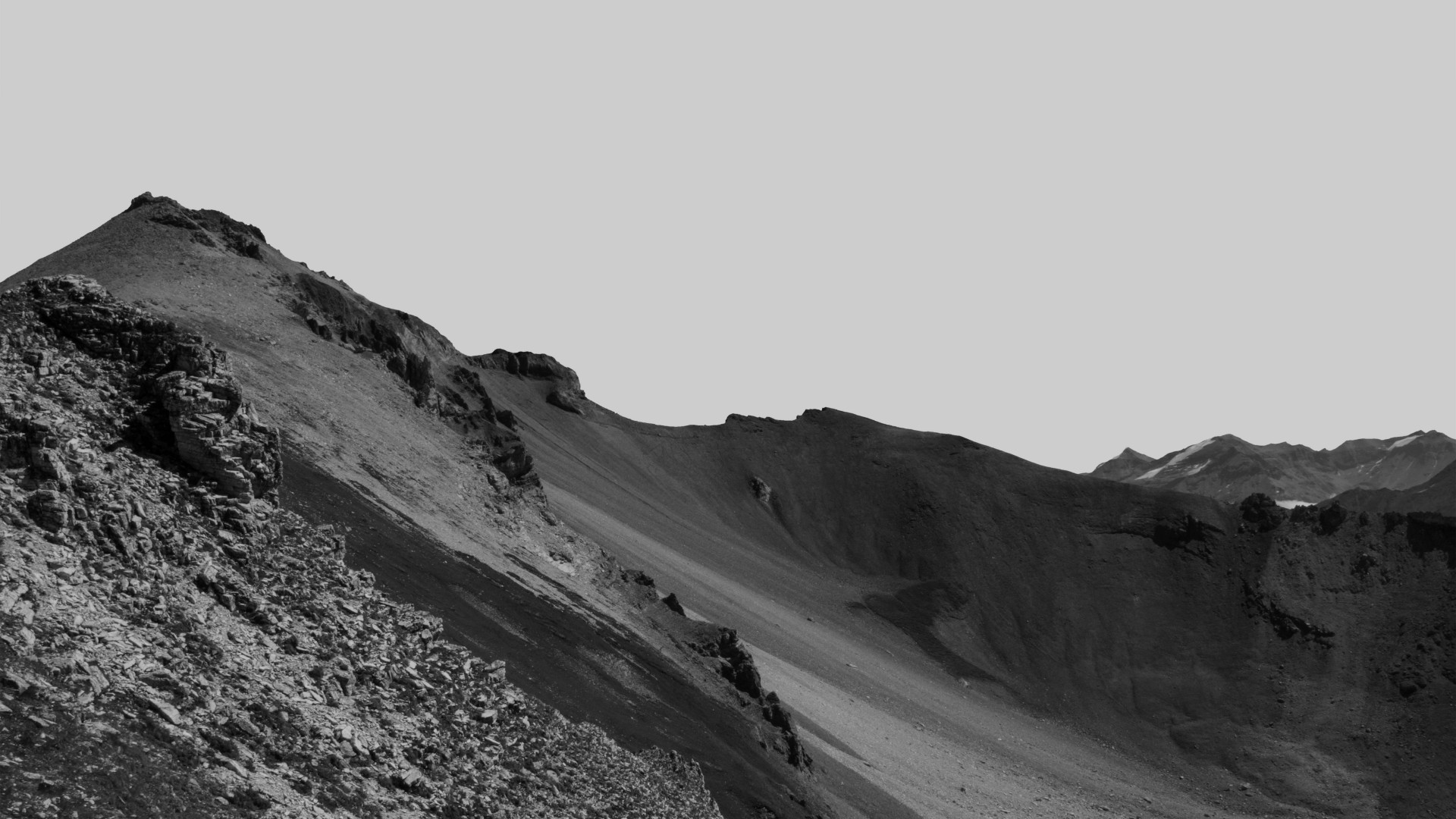
Just like a volcano, Pyros convokes both ideas of stiffness and softness at the same time, oscillating between rock-solid straight lines and sharp cuts on one hand (f, g, j, k, r, t, w, y…) and magma-like prominent trickling shapes on the other hand. Pyros nervous italic turns up the heat even futher.
Rooted in calligraphic tradition, more restless than the roman, it’s where the fire becomes visible.
Serious without being cold. Distinctive without announcing itself. Pyros is for work that wants to feel inevitable. The volcano doesn’t perform. It simply is.
Download PDF
You may also like

 View all